
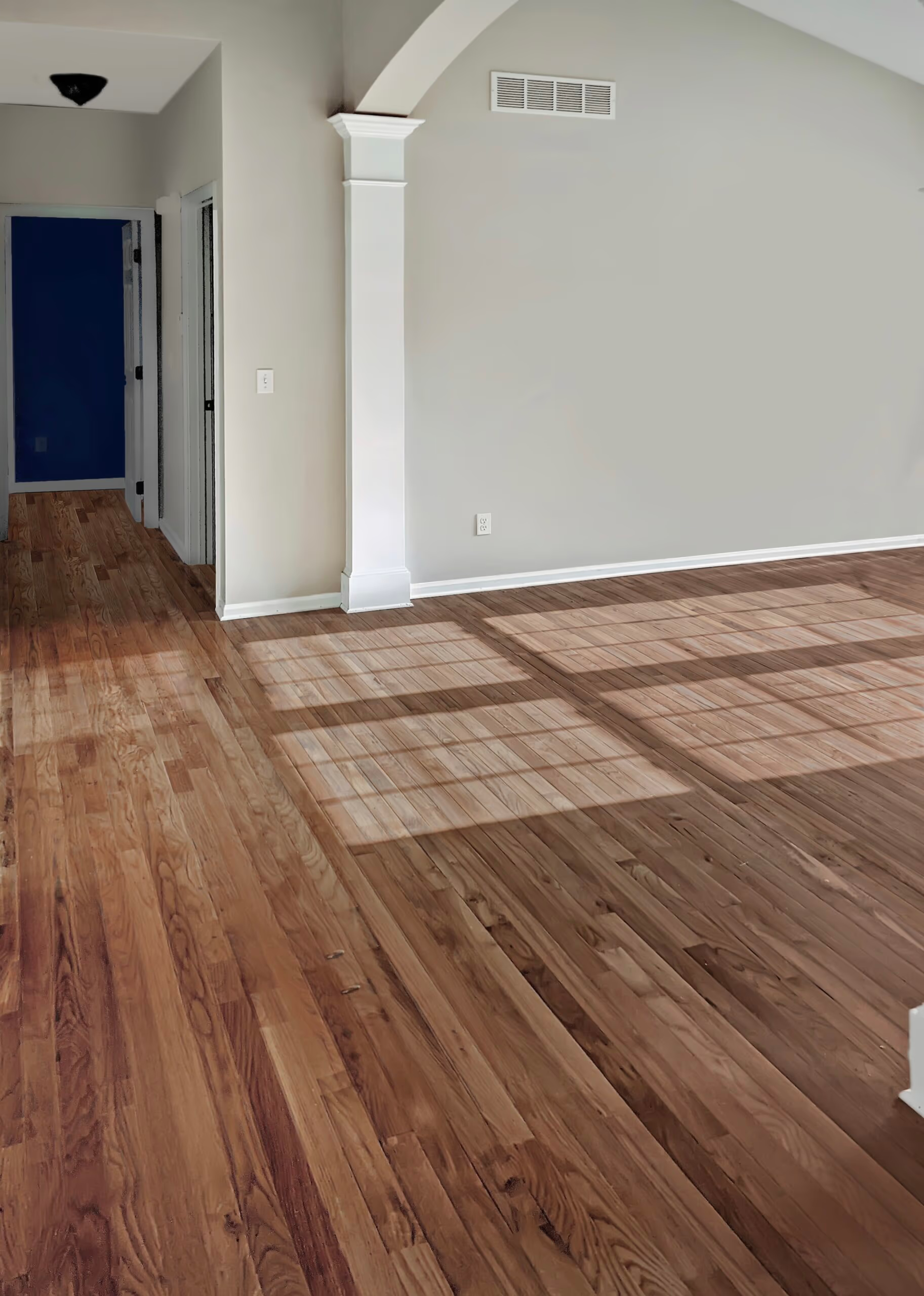

The oak is already there. It is just under the carpet.
Ranches and split-levels off Metcalf and Antioch, the blocks around Downtown Overland Park at 80th and Santa Fe, and the neighborhoods that filled in around Oak Park Mall. Built when solid strip oak was the default floor and carpet was the upgrade.
- Sand & finish
- Lace-in extensions
- Subfloor re-fastening
- Stair treads
Two-and-a-quarter-inch red oak strip over a board or early plywood subfloor. Tack-strip holes at the perimeter, a darker rectangle where a rug sat for thirty years, and three-quarters of an inch of wood you already paid for once.
Sand to bare wood, stain to a sample cut on your own floor, and lace new boards into the rooms the original run never reached so the seam disappears. Squeaks get fixed while the floor is open and the fasteners are reachable.
Remaining wear layer above the tongue, how many rooms have to lace together, and whether the subfloor moves. We measure all three at the estimate so nothing arrives as a change order on day two.
Typical project: three rooms plus a hallway, sanded and finished as one continuous floor — four to five days on site.
How refinishing works

