
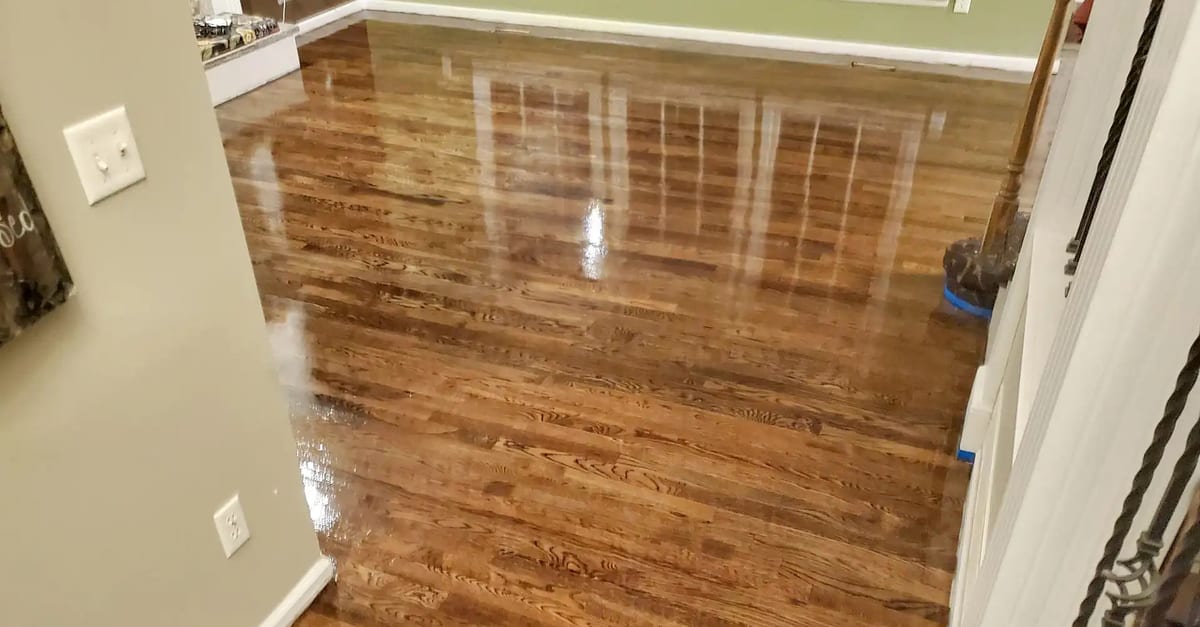
The Short Answer, Then What Moves It
In Johnson County, a full sand and refinish typically runs $3 to $6 per square foot, including labor, sandpaper, stain, finish and dust containment. A straightforward refinish that keeps the natural color sits at the low end, around $3 to $4. Changing the stain color moves it to about $4 to $5, and a floor that also needs gaps filled and damaged areas repaired lands nearer $4.50 to $6. On a 1,000-square-foot main level, that is roughly $3,500 to $6,000.
If the finish is dull and scuffed but has not worn through to bare wood, a screen-and-recoat is a different and much smaller job: about $1 to $2 per square foot. Knowing which of the two your floor needs is the single biggest factor in what you pay, so that is where this guide starts.
| Line item | Typical range | What moves it |
|---|---|---|
| Screen-and-recoat | $1–$2 / sq ft | Only possible while the old finish is intact and clean of wax |
| Sand and refinish, natural color | $3–$4 / sq ft | Square footage, depth of scratches, number of rooms and closets |
| Sand and refinish with a stain change | $4–$5 / sq ft | Stain samples, an extra day for application and drying |
| Refinish plus minor repairs | $4.50–$6 / sq ft | Gaps, deep scratches, pet damage, boards that need attention |
| Water-based finish upgrade | +$0.50–$1 / sq ft | Low odor and faster drying; oil-based is the standard rate |
| Stairs | $30–$50 / step | Hand sanding every tread; adds about a day for 12–16 steps |
| Furniture moving | $50 / item | Nothing, if the rooms are empty when the crew arrives |
| Dustless sanding and containment | Included | Confirm the same on any other quote before comparing totals |
One thing the per-foot numbers hide: size changes the rate. A crew loads the same sanders and spends the same time setting up containment for one bedroom as for a whole main level, so a single 200-square-foot room usually costs $800 to $1,600, which works out higher per foot than a large job. If two or three rooms are on your list for “someday,” doing them together is the easiest money you will save.
How Worn Is the Floor? The First Line on Every Quote
Hardwood finish wears in layers. First the sheen dulls and fine scratches show in the light from a window. Then the finish thins in the traffic paths, from the kitchen to the back door, down the hall, in front of the sofa. Finally it wears through, and the bare wood turns gray as dirt and moisture get into it. Where your floor sits on that path decides which job it needs and how hard the sanders have to work.
You can check this yourself before anyone visits. Put a few drops of water on the most worn spot. If they bead or sit on the surface, the finish is still protecting the wood. If they soak in and darken the board within a minute or two, the finish is gone there, and that area needs a full sand.
Surface Wear
What You See
- Dull, hazy finish that cleaning will not bring back
- Fine scratches from chairs, pets and grit
- Water still beads in the traffic paths
- The wood color underneath looks even
What It Usually Needs
- Screen-and-recoat, about $1–$2 / sq ft
- One fresh coat over the old, lightly abraded finish
Worn Through
What You See
- Gray or darkened wood in the traffic lanes
- Scratches and dents you can catch with a fingernail
- Water soaks in where people walk most
- Peeling or flaking finish, or old patches that do not match
What It Usually Needs
- Full sand and refinish, from about $3 / sq ft
- More sanding passes, and more cost, as the damage gets deeper
Within a full sand, condition still matters. A floor with light, even wear might need three grits on the big sander. A floor with deep scratches, dog-nail gouges or a cupped edge needs a coarser first pass and more time on the edger, and that is part of why the same square footage can quote at $3.25 on one street and $5 on the next.
Screen-and-Recoat vs. a Full Sand: The Biggest Swing in Price
A screen-and-recoat, sometimes called a buff and coat, lightly abrades the existing finish with a fine screen so a new coat will bond, then applies one fresh coat of finish. Nothing is sanded down to bare wood. It is fast, usually a day of work on a typical main level, and it costs a third or less of a full refinish. It is also the cheapest way to make a full sand unnecessary for years: recoating every three to five years in busy areas keeps the wear from ever reaching the wood.
What a recoat cannot do is just as important, because paying for one on the wrong floor wastes the money:
- It cannot fix worn-through areas. A new coat over gray, bare wood seals the gray in.
- It cannot change the color. Stain has to go onto freshly sanded wood.
- It will not stick to wax or some cleaner residues. Floors that have been waxed, or regularly treated with polish and shine products, may reject a new coat. A small adhesion test before committing to a recoat is worth the few minutes it takes.
- Factory finishes need care. Many prefinished floors have a very hard factory coating that new finish does not grip easily, so a recoat on those needs extra preparation or is not the right call.
Engineered hardwood adds one more question. Its real wood layer sits on top of a plywood core, and how thick that layer is decides whether the floor can be sanded at all. Many newer Olathe and Lenexa homes have engineered floors, and some of those can only ever be recoated. We measure the wear layer before quoting a sand, because sanding through it ruins the floor.
Solid hardwood, which is what most older Prairie Village and Overland Park houses have, can be fully sanded several times over its life. A full sand removes a thin layer of wood, so it is worth spending on only when the floor actually needs it.
Not Sure Whether Your Floor Needs a Recoat or a Sand?
That is the question a free in-home estimate answers first. We check the finish in the traffic paths, ask what the floor has been cleaned and polished with, measure engineered wear layers, and write a quote that tells you which job your floor actually needs, and what it costs, before anyone moves a sofa.
Get My Free EstimateChanging the Stain Color: What It Adds and Why
Keeping the natural color of the wood is the least expensive refinish. Going darker, lighter or warmer adds roughly $1 per square foot and about a day to the schedule, which is why a 1,000-square-foot refinish that would run $3,500 to $4,000 in a natural finish runs about $4,000 to $5,000 with a stain change. The extra covers the stain itself, the labor to apply and wipe it evenly across every room, and the drying time before the first coat of finish can go down.
A few things about stain that are worth knowing before you choose:
- Test it on your floor, not a sample board. The same can of stain looks different on red oak, white oak and maple, and different again on boards that came out of the same house in 1955. We lay test patches on a sanded area so you can see them in your own light.
- Red oak has a warm, slightly pink undertone. It takes brown and warm stains beautifully. Cool grays can read muddy on it, which is part of why gray floors from a few years ago are the ones we now get asked to warm back up.
- Maple and some other dense woods stain unevenly. Dark colors can blotch, so a natural finish or a light tone is often the better look on those floors.
- Very dark colors show more. Dust, pet hair and fine scratches stand out on an ebony-type floor far more than on a mid-brown one, which is worth weighing in a house with a big dog.
Popular choices in Kansas City homes include natural, Early American (a medium brown), Jacobean (a deep walnut) and Weathered Oak (a gray-brown). Wondering what color floors are in for 2026? The short version is that warm and natural tones, honey, amber and warm walnut, have replaced the gray-washed looks, and matte and satin sheens have replaced high gloss. Our 2026 flooring trends guide for Kansas City goes deeper on colors and plank widths.
Finish Type and the Number of Coats
Once the floor is sanded, and stained if you are changing the color, the protective finish goes on in coats. The standard is two to three coats of polyurethane, with drying time between each. That finish, not the wood, is what takes the daily wear, so the number of coats and the type of finish decide how long it is before you are paying for this again.
Oil-Based Polyurethane
The Trade-Offs
- Included at the standard refinishing rate
- Durable, with a warm amber tone that deepens over time
- Strong odor for 24–48 hours; plan to ventilate
- Longer drying between coats and before furniture
Water-Based Polyurethane
The Trade-Offs
- Adds about $0.50–$1 / sq ft
- Low odor, a better fit for homes with kids, pets or allergies
- Dries faster, so coats can go on sooner
- Stays clearer, keeping light woods like white oak from yellowing
Should you pay for an extra coat? In a bedroom or a formal dining room, two to three coats is plenty. In a kitchen where the dog’s water bowl lives, the hallway everyone runs down, or the stretch of floor inside the garage door, a third coat or a more durable finish buys real years before the next screen-and-recoat. It is a small line on the quote compared with sanding the floor again, and it is the one place we would rather see a homeowner spend a little more.
Sheen makes only a small difference to the price, but a big one to how the floor lives. Satin is the choice on most of our refinishing jobs because it hides everyday scratches and dust well. Matte hides even more. Semi-gloss looks striking and shows every flaw. Our hardwood refinishing service page walks through the full sanding-to-final-coat process and compares the three sheens side by side.
Board Repairs, Gaps and Stairs
Before any sanding, we walk the floor looking for loose boards, nails working up, squeaks and damage that sanding alone will not remove. The repairs that come up most often in Johnson County homes:
Gaps between boards
Some seasonal gapping is normal in Kansas City, where dry winters shrink the wood and humid summers swell it. Wide, permanent gaps can be filled during the refinish; that is part of what the $4.50–$6 tier covers.
Pet and water stains
Light surface marks sand out. Dark stains where moisture soaked deep into the wood, the classic black ring by a plant or a pet’s favorite corner, usually go all the way through the board and mean replacing those boards.
Replacing damaged boards
Damaged boards are cut out and new ones are woven into the existing floor, so the patch disappears once everything is sanded and finished together. It is priced by the area involved, which is why we look before quoting it.
Floor uncovered from under carpet
Original oak under old carpet is common in Prairie Village and Shawnee. Expect tack strip holes around the edges and staple holes to fill, and sometimes a section where a wall or a floor vent was moved.
Stairs are priced separately at $30 to $50 per step, because every tread is sanded by hand rather than with the big machine, and they usually add a day for a 12- to 16-step staircase. The same lace-in technique works at a larger scale too: on one Westwood main level we removed the carpet, laced new oak into the original floor and sanded it all together, so the new boards and the old ones finished as one floor.
Three Johnson County Quotes, Worked Out
Ranges are easier to trust with arithmetic attached. These three examples use the numbers above. They are illustrations, not quotes, since your rooms will measure differently, but they show which choices actually move the total.
Prairie Village: 1,000 sq ft of original red oak, natural color
A 1950s house with the original oak throughout the main level. The finish is worn through in the hall and kitchen path but the boards are sound. The owners want to keep the natural color in a satin sheen with oil-based finish.
| Line | Basis | Range |
|---|---|---|
| Sand and refinish, natural color | 1,000 sq ft, standard rate | $3,500–$4,000 |
| Furniture moving | Owners empty the rooms themselves | $0 |
| Total | 3–4 days | $3,500–$4,000 |
Overland Park: 650 sq ft plus stairs, changing to a darker stain
A two-story family home. The living room, dining room and upstairs hall, about 650 square feet, are going from a dated golden tone to Jacobean, with a water-based finish because of a toddler and a dog. Thirteen oak stairs connect the two floors.
| Line | Basis | Range |
|---|---|---|
| Sand and refinish with stain change | 650 sq ft at $4–$5 | $2,600–$3,250 |
| Water-based finish upgrade | 650 sq ft at $0.50–$1 | $325–$650 |
| Stairs | 13 steps at $30–$50 | $390–$650 |
| Total | About 5–6 days | $3,315–$4,550 |
Smaller than the Prairie Village floor, nearly the same total. The stain change, the finish upgrade and the stairs each add a modest line, and together they close the gap.
Olathe: 450 sq ft family room and kitchen, recoat instead of sand
A 2000s house with site-finished oak in the kitchen and family room. Scuffed and dull, but the water test beads everywhere and there is no wax on the floor. A screen-and-recoat is the right call, with a full sand saved for years from now.
| Line | Basis | Range |
|---|---|---|
| Screen-and-recoat | 450 sq ft at $1–$2 | $450–$900 |
| Furniture moving | Sectional, table and island stools: 3 items at $50 | $150 |
| Total | About a day of work | $600–$1,050 |
Had the owners waited until the kitchen path wore through, the same 450 square feet would have been a full sand at $1,350 to $1,800 or more. Very small jobs can carry a minimum charge, so it is worth asking about if you are only doing one room.
Refinish or Replace? Putting the Numbers Side by Side
How much does it cost to install 1,000 square feet of hardwood flooring? In the Kansas City metro, new hardwood runs roughly $14 to $32 per square foot for materials, installation and finishing, so about $14,000 to $32,000. Refinishing the same 1,000 square feet costs $3,500 to $6,000. If the floor you have is sound, refinishing is almost always the better use of the money.
Replacement starts to make sense when sanding cannot solve the problem: boards cupped or rotted from a long-running leak, an engineered floor with no wear layer left, a solid floor that has been sanded so many times the tongues are showing, or a layout change that puts hardwood where there was none. Even then, replacing only the damaged area and refinishing the rest is often possible. Our breakdown of what hardwood floor installation costs per square foot in Kansas City covers the replacement side line by line.
Can you refinish hardwood floors yourself? A screen-and-recoat on a sound floor is a manageable weekend for a careful homeowner with a rented buffer. A full sand is harder. A drum sander removes wood quickly, and one pause in the wrong spot leaves a dip that every coat of finish will highlight. Rental machines also usually lack the dust collection professional rigs use. If the budget is tight, the do-it-yourself work that reliably saves money is emptying the rooms, which takes the furniture line off the quote entirely.
Why Fall Is a Smart Time to Refinish
Refinishing works any time of year, but late summer through fall is the season we would choose for our own houses, for three reasons.
- The weather helps the finish. Fall in Kansas City usually brings mild temperatures and moderate humidity, which suits finish drying and curing. Windows can be open for ventilation without running the air conditioning or letting the heat out.
- The wood is in a middle state. Floors are near their summer size before the furnace dries the house out. Filling gaps and sanding in that middle range, then keeping indoor humidity steady through winter, gives the best-looking result through the year. Our guide to hardwood floors and Kansas City humidity explains why boards gap in January.
- The holidays are a deadline you can plan around. A floor needs the work days plus about a week before rugs go down and the full weight of a holiday table and chairs goes on it. Working back from the first guest arriving tells you when the job needs to start.
For a typical 1,000-square-foot main level, that means the crew should be finished about a week before guests arrive, which puts the start date roughly two weeks out. If Thanksgiving is at your house, ask about scheduling as soon as you know. If it is a December gathering, there is still time, but a quick estimate visit now keeps you from choosing between a rushed floor and a rug over the worn spot.
Can you stay home during the work? Many families do, especially with water-based finish, though sanding is loud and an oil-based finish is easier to live with if you spend the coating days elsewhere. You will need a plan for the rooms being off-limits, a path to the kitchen if it is part of the job, and somewhere for pets to stay away from wet finish.